One Land, Many Stories — Dreaming story handout
The Three Sisters
Gundungurra & Darug country — the Blue Mountains
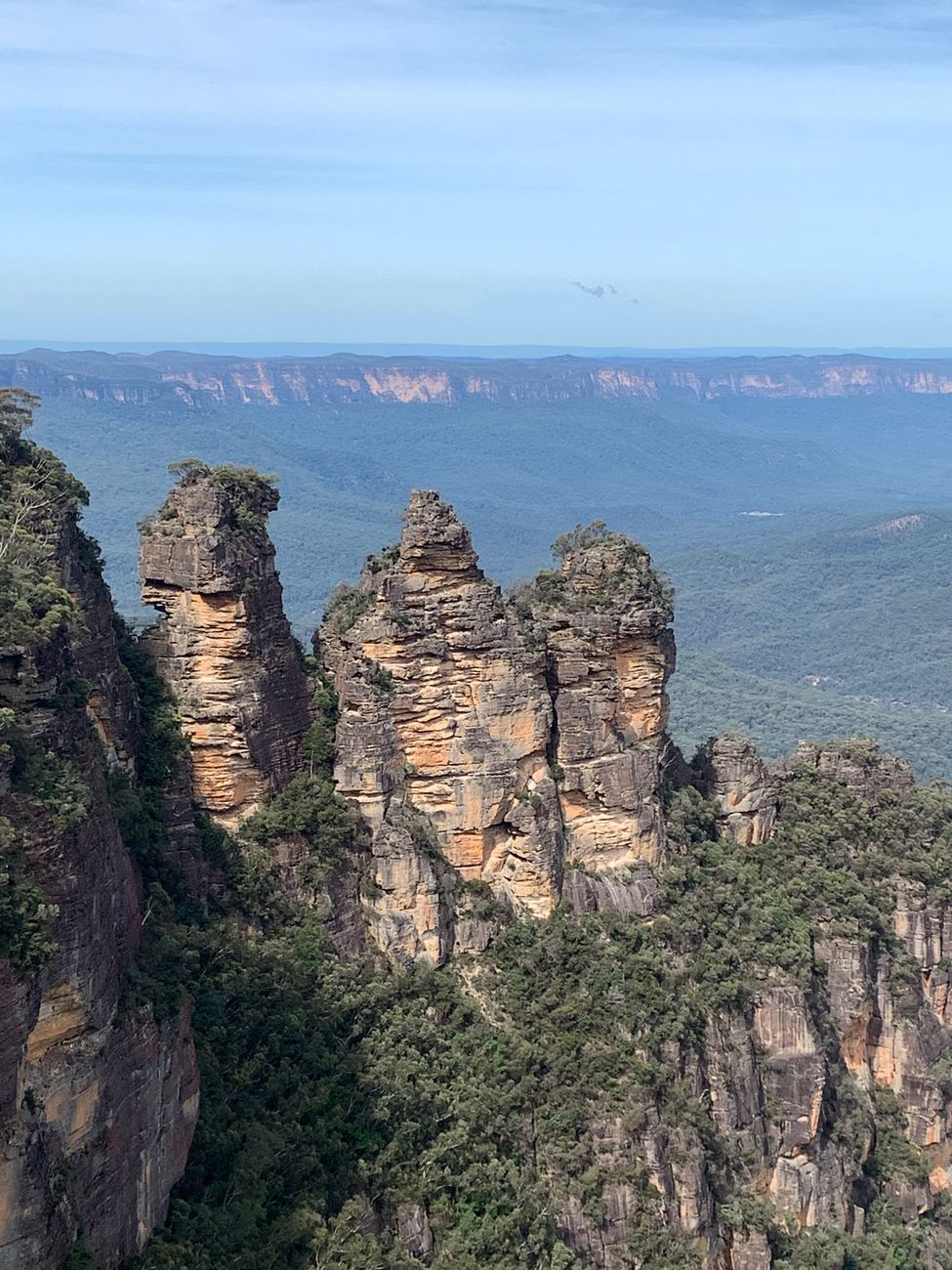
Dreaming story — Gundungurra & Darug country — the Blue Mountains
The Three Sisters
Three pillars above the Jamison Valley, holding a story the mountains never let go.
The story
Told as it is shared
Above the Jamison Valley, near Katoomba, three pillars of sandstone stand within sight of the escarpment. In the widely told version, they are three sisters — Meehni, Wimlah and Gunnedoo — daughters of a Gundungurra man of great magic. When danger came for the girls, their father turned them to stone to keep them safe, meaning to change them back when it passed. He did not survive the danger; the sisters did.
Other tellings belong to Gundungurra and Darug people, and are not for the tourist brochures. What is not in dispute is the older story: the Blue Mountains were a highway of trade, ceremony and law for tens of thousands of years before 1813, when the colony finally found a way across them — and named everything it saw.
The Three Sisters now watch over one of the most visited landscapes in Australia. For Darug and Gundungurra custodians, they are also a classroom: a place where the truth of the country can be told plainly.
Country & context
The land that holds it
The Blue Mountains rise west of Sydney in Darug and Gundungurra country — a plateau of deep gorges and hanging swamps that took the colony sixteen years to cross. The escarpments hold stone arrangements, carving sites and camp grounds older than any city on the continent.
Art & memory
Painted, woven, sung
The region's rock overhangs shelter stencils, engravings and grindstones. At Echo Point, the Waradah Aboriginal Centre presents performance and gallery art of the region's nations, and Darug and Gundungurra guides lead walks that read the escarpment as country, not scenery.
Next story
Tiddalik the Frog
Gunai/Kurnai country — Gippsland