
When the first pyramids rose in Egypt, people had already lived on this continent for more than fifty-five thousand years. This is the longest unbroken story on Earth.
01
The oldest living cultures on Earth
At Madjedbebe, a rock shelter in Arnhem Land, the archaeological record reaches back around 65,000 years — the oldest known human occupation of Australia and one of the longest anywhere on the planet. Those first Australians made ground-edge axes, ground ochre for paint and carried reflective pigment; they were, from the beginning, engineers of tools and meaning.
By the time the First Fleet sailed through the heads in 1788, the continent held some 250 distinct language groups — hundreds of nations, each with its own law, ceremony, trade networks and kinship system. Together they had survived an Ice Age, rising seas and shifting climates for an unbroken 2,600 generations.
02
Songlines: the land as a library
First Nations knowledge is carried in songlines — chains of song, story, ceremony and design that map creation, country and law across the continent. A songline can hold the location of water in drought, the season for hunting, the rules of marriage and trade. Walking it, a person sings the land into being.
Places anchor the stories: Uluru and Kata Tjuta rise as Tjukurpa made solid; rock galleries at Ubirr and the Kimberley's Wandjina sites record thousands of years of painting over painting. Art here is not decoration but record — a library painted on stone, sung in ceremony and danced across the body.
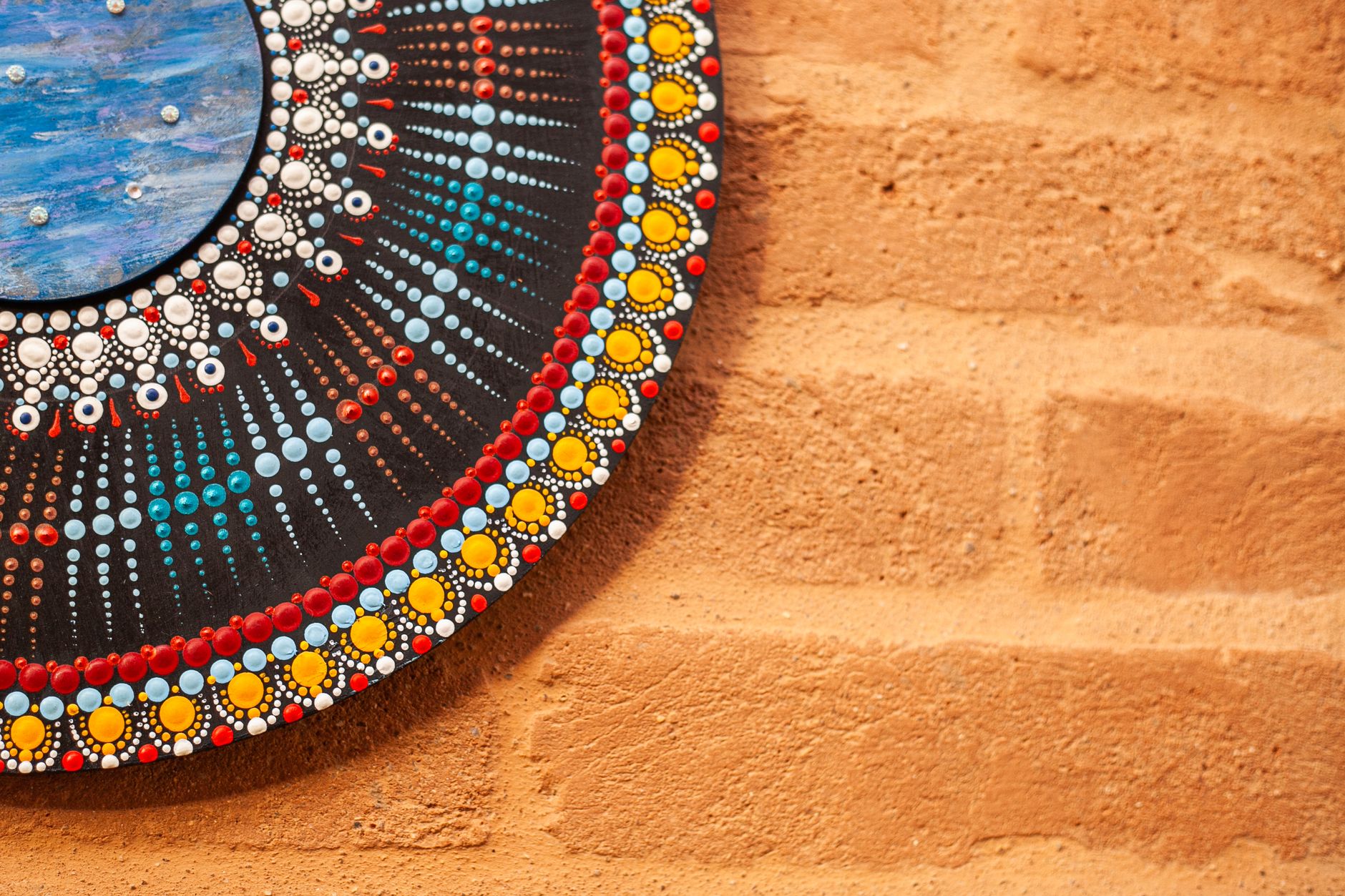
Contemporary painting in Central and Western Desert traditions
03
Caring for Country: engineering the outback
The idea that First Nations people were simple hunter-gatherers is the newest myth on the continent. They farmed: the Gunditjmara built stone channels, dams and traps at Budj Bim to harvest kooyang (eels) — a system dated to around 6,600 years old and inscribed on the UNESCO World Heritage list in 2019. They burned Country in mosaic patterns of cool fire, encouraging grasses, protecting trees and driving game — a land management science now being relearned by fire agencies.
Trade moved pituri, ochre, stone tools and song across thousands of kilometres. Grain was harvested and threshed on the Darling River for bread. The Torres Strait's people navigated by stars across open water. Deep Time was not a waiting room — it was a civilisation at work.
“When the first pyramids rose in Egypt, people had already lived here for over 55,000 years.”
Key moments
Faces of the era
Next — Chapter II